> ## Documentation Index
> Fetch the complete documentation index at: https://docs.layerzero.network/llms.txt
> Use this file to discover all available pages before exploring further.
# LayerZero V2 Aptos Move OFT
> Below is comprehensive documentation for Aptos Move OFT modules, explaining both the OFT and OFT Adapter, mirroring the LayerZero V2 OFT Standard you...
Below is comprehensive documentation for Aptos Move **OFT** modules, explaining both the **OFT** and **OFT Adapter**, mirroring the **LayerZero V2 OFT Standard** you might see on [EVM](../../evm/oft/quickstart) or [Solana](../../solana/oft/overview).
The Omnichain Fungible Token (OFT) Standard allows **fungible tokens** to be transferred across multiple blockchains without asset wrapping or middlechains.
This standard works by either debiting (`burn` / `lock`) tokens on the source chain, sending a message via LayerZero, and delivering a function call to credit (`mint` / `unlock`) the same number of tokens on the destination chain.
This creates a **unified supply** across all networks that the OFT supports.
### What is OFT?
An **Omnichain Fungible Token (OFT)** is a LayerZero-based token that can be sent across chains without wrapping or middle-chains. It supports:
* **Burn + Mint** (OFT): Remove supply from the source chain, re-create it on the destination.
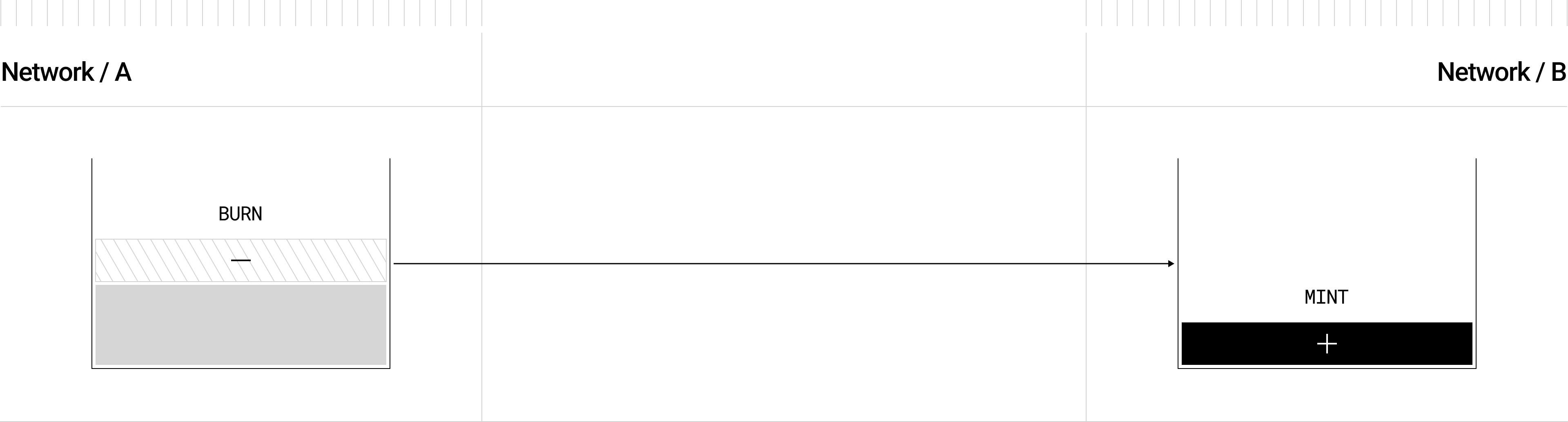
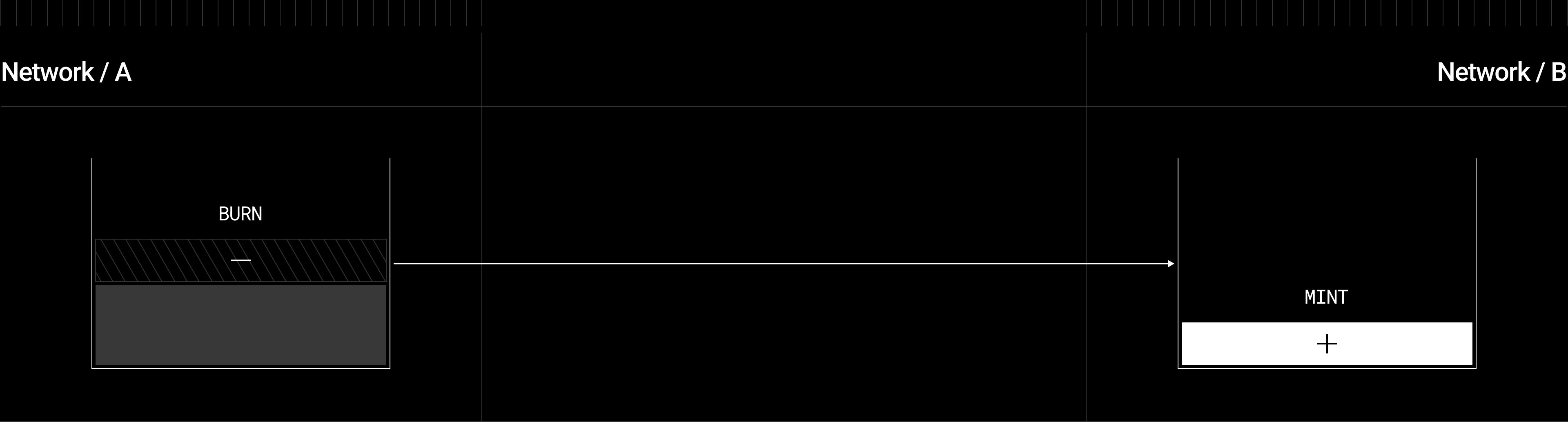 * **Lock + Unlock** (OFT Adapter): Move supply into an escrow on the source, release it on the destination.

 On EVM, you see this logic embedded in an `OFT.sol` or `OFTAdapter.sol` contract. In Aptos Move, we achieve the same through specialized modules:
1. **`oft::oft_fa`** – OFT “mint/burn” approach.
2. **`oft::oft_adapter_fa`** – OFT Adapter “lock/unlock” approach.
3. **`oft::oft`** – Unified interface for user-level send, quote, and receive entry points.
4. **`oft::oft_core`** – Core bridging logic shared by both OFT and OFT Adapter.
5. **`oft::oft_impl_config`** – Central config for fees, blocklisting, rate limits (used by both).
6. **`oft::oft_store`** – Tracks shared vs. local decimals so each chain can represent the token with different local decimals if needed.
7. **`oft::oapp_core` / `oft::oapp_store`** – The OApp plumbing for bridging messages crosschain, handling admin/delegate roles, peer configuration, etc.
The **EVM/Solana OFT** relies on `ERC20`/`SPL` logic for mint/burn or lock/unlock.
The **Aptos OFT** relies on Move’s `Fungible Asset` standard. `oft::oft_fa` does actual mint/burn, while `oft::oft_adapter_fa` locks/unlocks an existing `Fungible Asset` in an escrow.
### 2. Relating the OApp and OFT Modules
The **OApp Standard** gives your contract the ability to:
* **Send** crosschain messages (`lz_send`)
* **Receive** crosschain messages (via `lz_receive`)
* **Quote** crosschain fees
* **Enforce** admin- or delegate-level controls
The **OFT Standard** then builds on top of that to specifically handle:
* **Fungible Asset** bridging
* Local token manipulations (burn/mint or lock/unlock)
* Additional rate-limiting, blocklists, bridging fees, etc.
All crosschain calls still flow through `lz_send` and `lz_receive` in `oft_core`, which rely on the OApp’s ability to call the LayerZero Endpoint. This is exactly how the EVM `OFT` extends `OApp` to unify crosschain token operations.
## OFT: `oft::oft_fa`
When tokens are sent crosschain, the module **burns** tokens from the sender’s local supply.
On the receiving chain, it **mints** newly created tokens for the recipient.
In EVM, you might see this with an `ERC20` implementation that calls `_burn` in `send()` and `_mint` in `lzReceive()`. On Aptos, `oft_fa.move` uses **Move’s** `FungibleAsset`:
```rust wrap theme={null}
public(friend) fun debit_fungible_asset(
sender: address,
fa: &mut FungibleAsset,
min_amount_ld: u64,
dst_eid: u32,
): (u64, u64) acquires OftImpl {
// 1. Check blocklist
assert_not_blocklisted(sender);
// 2. Determine the “send” and “receive” amounts (minus dust/fees)
let amount_ld = fungible_asset::amount(fa);
let (amount_sent_ld, amount_received_ld) = debit_view(amount_ld, min_amount_ld, dst_eid);
// 3. Rate limit checks (no exceeding capacity)
try_consume_rate_limit_capacity(dst_eid, amount_received_ld);
// 4. Subtract the fee from the total
let extracted_fa = fungible_asset::extract(fa, amount_sent_ld);
if (fee_ld > 0) { ... }
// 5. Burn the final extracted tokens
fungible_asset::burn(&store().burn_ref, extracted_fa);
(amount_sent_ld, amount_received_ld)
}
```
```rust wrap theme={null}
public(friend) fun credit(
to: address,
amount_ld: u64,
src_eid: u32,
lz_receive_value: Option,
): u64 acquires OftImpl {
// 1. (Optional) deposit crosschain wrapped asset to the admin
option::for_each(lz_receive_value, |fa| primary_fungible_store::deposit(@oft_admin, fa));
// 2. Release rate limit capacity for net inflows
release_rate_limit_capacity(src_eid, amount_ld);
// 3. Mint the tokens to the final recipient (or redirect if blocklisted)
primary_fungible_store::mint(
&store().mint_ref,
redirect_to_admin_if_blocklisted(to, amount_ld),
amount_ld
);
amount_ld
}
```
You will want to use the `oft::oft_fa` implementation when you want:
* a brand new token on Aptos representing the crosschain supply.
* each chain to independently mint/burn.
* to bridge a new “canonical” supply for an existing non-Aptos asset on an Aptos chain.
## Adapter OFT: `oft::oft_adapter_fa`
Instead of burning/minting tokens, the module **locks** tokens into an escrow on send and **unlocks** them from escrow on receive.
This can be used if you already have an existing token on an Aptos Move chain that can’t share its mint/burn capabilities.
On EVM, you might see an OFT that uses a "lockbox" to hold user tokens, sending representations of that held asset crosschain. The approach is the same on Aptos:
```rust wrap theme={null}
public(friend) fun debit_fungible_asset(
sender: address,
fa: &mut FungibleAsset,
min_amount_ld: u64,
dst_eid: u32,
): (u64, u64) acquires OftImpl {
// 1. Check blocklist
assert_not_blocklisted(sender);
// 2. Determine the “send” and “receive” amounts
let (amount_sent_ld, amount_received_ld) = debit_view(amount_ld, min_amount_ld, dst_eid);
// 3. Subtract fees if any
let extracted_fa = fungible_asset::extract(fa, amount_sent_ld);
if (fee_ld > 0) { ... }
// 4. Deposit the net tokens into an “escrow” account
primary_fungible_store::deposit(escrow_address(), extracted_fa);
(amount_sent_ld, amount_received_ld)
}
```
```rust wrap theme={null}
public(friend) fun credit(
to: address,
amount_ld: u64,
src_eid: u32,
lz_receive_value: Option,
): u64 acquires OftImpl {
// 1. (Optional) deposit crosschain “wrapped” asset to admin
option::for_each(lz_receive_value, |fa| primary_fungible_store::deposit(@oft_admin, fa));
// 2. Release rate limit capacity
release_rate_limit_capacity(src_eid, amount_ld);
// 3. Unlock from escrow into the final recipient
let escrow_signer = &object::generate_signer_for_extending(&store().escrow_extend_ref);
primary_fungible_store::transfer(
escrow_signer,
metadata(),
redirect_to_admin_if_blocklisted(to, amount_ld),
amount_ld
);
amount_ld
}
```
You will want to use the `oft::oft_adapter_fa` implementation when you:
* have a pre-existing token on Aptos and cannot or do not want to grant mint/burn to the bridging contract.
The adapter approach “locks” user tokens, so be mindful of ensuring adequate liquidity in the adapter if bridging in from other chains.
Typically, only one chain uses the adapter approach (since the “escrow” is meant to represent the supply on that chain). Other chains should use full mint/burn logic.
## Common Interface: `oft::oft`
Both **`oft_fa`** and **`oft_adapter_fa`** feed into the same top-level interface (`oft::oft`). This module:
* Exposes user-facing functions like `send_withdraw(...)`, `send(...)`, `quote_oft(...)`, etc.
* Delegates the actual bridging logic to either “OFT” or "OFT Adapter" code (by depending on whichever you’ve chosen).
* Implements the final `lz_receive_impl(...)` function so that crosschain messages from `oft_core` eventually call your `credit(...)`.
Example from `oft.move`:
```rust wrap theme={null}
public entry fun send_withdraw(
account: &signer,
dst_eid: u32,
to: vector,
amount_ld: u64,
...
) {
// 1. Withdraw tokens from user
let send_value = primary_fungible_store::withdraw(account, metadata(), amount_ld);
// 2. Withdraw crosschain fees
let (native_fee_fa, zro_fee_fa) = withdraw_lz_fees(account, native_fee, zro_fee);
// 3. Call OFT core “send” logic
send_internal(
sender,
dst_eid,
to_bytes32(to),
&mut send_value,
...
);
// 4. Refund leftover fees & deposit any leftover tokens
refund_fees(sender, native_fee_fa, zro_fee_fa);
primary_fungible_store::deposit(sender, send_value);
}
```
## Core Logic: `oft::oft_core`
Regardless of whether it’s an **OFT** or **OFT Adapter**, the crosschain bridging sequence is the same:
1. **`send(...)`** – Encodes the message, calls your `debit` function, and dispatches it over the LayerZero Endpoint.
2. **`receive(...)`** – Decodes the message, calls your `credit` function, and optionally calls “compose” logic if there is a follow-up message.
In an EVM environment, OFT variants do something similar with `_burn`, `_mint`, or `_transfer`. The separation is conceptually the same.
```rust wrap theme={null}
public(friend) inline fun send(
user_sender: address,
dst_eid: u32,
to: Bytes32,
compose_payload: vector,
send_impl: |vector, vector| MessagingReceipt,
debit: |bool| (u64, u64),
build_options: |u64, u16| vector,
inspect: |&vector, &vector|,
): (MessagingReceipt, u64, u64) {
let (amount_sent_ld, amount_received_ld) = debit(true);
// Construct the message to contain 'amount_received_ld' and 'to' address
let (message, msg_type) = encode_oft_msg(user_sender, amount_received_ld, to, compose_payload);
let options = build_options(amount_received_ld, msg_type);
inspect(&message, &options);
let messaging_receipt = send_impl(message, options);
// Emit an event for crosschain reference
...
}
```
## Implementation Config: `oft::oft_impl_config`
Both **OFT** and **OFT Adapter** share the same configuration for:
* **Fees**: `fee_bps`, `fee_deposit_address`.
* **Blocklist**: Addresses can be disallowed from sending. Inbound tokens to them are re-routed to the admin.
* **Rate Limits**: Each endpoint (chain) can be rate-limited to prevent large surges of bridging.
Example for setting fees:
```rust wrap theme={null}
public entry fun set_fee_bps(admin: &signer, fee_bps: u64) {
assert_admin(address_of(admin));
oft_impl_config::set_fee_bps(fee_bps);
}
```
## Internal Store: `oft::oft_store`
Holds two critical values:
1. **`shared_decimals`**: The universal decimals used across all chains.
2. **`decimal_conversion_rate`**: The factor bridging from local decimals to shared decimals.
This matches the approach on EVM-based OFT, where you might define a consistent “decimals” across all chains, and each chain adapts locally if it wants a different local representation.
```rust wrap theme={null}
public(friend) fun initialize(shared_decimals: u8, decimal_conversion_rate: u64) acquires OftStore {
assert!(store().decimal_conversion_rate == 0, EALREADY_INITIALIZED);
store_mut().shared_decimals = shared_decimals;
store_mut().decimal_conversion_rate = decimal_conversion_rate;
}
```
## Comparison Between OFT and OFT Adapter
| Feature | **OFT (mint/burn)** | **OFT Adapter (lock/unlock)** |
| ----------------------------------- | -------------------------------------------------------------------------------------------------------------- | --------------------------------------------------------------------------------------------------------------------------------------------------- |
| Token Ownership / Supply | The OFT can create (mint) or destroy (burn) tokens. Perfect for brand-new token supply across multiple chains. | The OFT does **not** create or destroy tokens. It merely locks them into an escrow, then unlocks them upon crosschain receive. |
| Use Case | Great for truly omnichain tokens that unify supply. Each chain can hold a minted portion. | Ideal if an existing token is already deployed, and you can’t share mint/burn privileges with the bridging contract. |
| Implementation Module | `oft_fa.move` | `oft_adapter_fa.move` |
| `credit(...)` Behavior | **Mint** the inbound tokens for the recipient. | **Unlock** from escrow and deposit to the recipient. |
| `debit(...)` Behavior | **Burn** from the sender’s local supply. | **Lock** tokens in an escrow address. |
| Rebalancing or Liquidity Management | Not required for new tokens (the total supply is burned on one side, minted on the other). | Must ensure enough tokens remain in escrow to handle inbound “unlocks” from other chains. If many tokens flow out, local liquidity may be depleted. |
## Putting It All Together
1. **Deploy & Initialize**
* Deploy the modules (`oft_adapter_fa`, `oft_fa`, `oft`, etc.).
* Call `init_module` or `init_module_for_test`.
* For the chosen path (native vs. adapter), run the relevant `initialize(...)` function (e.g., `oft_fa.initialize` or `oft_adapter_fa.initialize`).
2. **Configure**
* Adjust fees, blocklists, or rate-limits using `oft::oft_impl_config`.
* For the adapter approach, ensure the escrow has enough tokens to handle inbound bridging from other chains.
3. **Sending**
* A user calls `send_withdraw(...)` from `oft::oft`.
* This performs the local “debit” logic (burn or lock) and constructs a crosschain message.
* Then calls the underlying `lz_send(...)` from the OApp layer.
4. **Receiving**
* The LayerZero Executor calls your OApp’s `lz_receive_impl(...)`.
* This triggers `oft_core::receive(...)`, which decodes the message and calls your `credit(...)` logic (mint or unlock).
5. **Monitor**
* Check events: `OftSent` and `OftReceived` in `oft_core`.
* Track blocklist changes, fee deposit addresses, and rate limit usage in `oft_impl_config`.
## Conclusion
Whether you choose an **OFT** (mint/burn) or an **OFT Adapter** (lock/unlock):
* The **core bridging** is consistent with the **LayerZero V2 OFT Standard** on EVM/Solana.
* **Fee, blocklist, and rate-limit** logic is shared in `oft_impl_config`.
* **Message encoding/decoding** and **compose** features align with `oft_core`.
* **Shared decimals** plus local decimals ensure consistent crosschain supply.
**OFT** are perfect for new tokens that do not exist outside of the bridging context, while **OFT Adapter** allow you to adopt bridging on an existing, fully deployed token.
Both approaches integrate seamlessly with LayerZero’s crosschain messaging on Aptos, providing a robust, modular framework for omnichain fungible tokens.
On EVM, you see this logic embedded in an `OFT.sol` or `OFTAdapter.sol` contract. In Aptos Move, we achieve the same through specialized modules:
1. **`oft::oft_fa`** – OFT “mint/burn” approach.
2. **`oft::oft_adapter_fa`** – OFT Adapter “lock/unlock” approach.
3. **`oft::oft`** – Unified interface for user-level send, quote, and receive entry points.
4. **`oft::oft_core`** – Core bridging logic shared by both OFT and OFT Adapter.
5. **`oft::oft_impl_config`** – Central config for fees, blocklisting, rate limits (used by both).
6. **`oft::oft_store`** – Tracks shared vs. local decimals so each chain can represent the token with different local decimals if needed.
7. **`oft::oapp_core` / `oft::oapp_store`** – The OApp plumbing for bridging messages crosschain, handling admin/delegate roles, peer configuration, etc.
The **EVM/Solana OFT** relies on `ERC20`/`SPL` logic for mint/burn or lock/unlock.
The **Aptos OFT** relies on Move’s `Fungible Asset` standard. `oft::oft_fa` does actual mint/burn, while `oft::oft_adapter_fa` locks/unlocks an existing `Fungible Asset` in an escrow.
### 2. Relating the OApp and OFT Modules
The **OApp Standard** gives your contract the ability to:
* **Send** crosschain messages (`lz_send`)
* **Receive** crosschain messages (via `lz_receive`)
* **Quote** crosschain fees
* **Enforce** admin- or delegate-level controls
The **OFT Standard** then builds on top of that to specifically handle:
* **Fungible Asset** bridging
* Local token manipulations (burn/mint or lock/unlock)
* Additional rate-limiting, blocklists, bridging fees, etc.
All crosschain calls still flow through `lz_send` and `lz_receive` in `oft_core`, which rely on the OApp’s ability to call the LayerZero Endpoint. This is exactly how the EVM `OFT` extends `OApp` to unify crosschain token operations.
## OFT: `oft::oft_fa`
When tokens are sent crosschain, the module **burns** tokens from the sender’s local supply.
On the receiving chain, it **mints** newly created tokens for the recipient.
In EVM, you might see this with an `ERC20` implementation that calls `_burn` in `send()` and `_mint` in `lzReceive()`. On Aptos, `oft_fa.move` uses **Move’s** `FungibleAsset`:
```rust wrap theme={null}
public(friend) fun debit_fungible_asset(
sender: address,
fa: &mut FungibleAsset,
min_amount_ld: u64,
dst_eid: u32,
): (u64, u64) acquires OftImpl {
// 1. Check blocklist
assert_not_blocklisted(sender);
// 2. Determine the “send” and “receive” amounts (minus dust/fees)
let amount_ld = fungible_asset::amount(fa);
let (amount_sent_ld, amount_received_ld) = debit_view(amount_ld, min_amount_ld, dst_eid);
// 3. Rate limit checks (no exceeding capacity)
try_consume_rate_limit_capacity(dst_eid, amount_received_ld);
// 4. Subtract the fee from the total
let extracted_fa = fungible_asset::extract(fa, amount_sent_ld);
if (fee_ld > 0) { ... }
// 5. Burn the final extracted tokens
fungible_asset::burn(&store().burn_ref, extracted_fa);
(amount_sent_ld, amount_received_ld)
}
```
```rust wrap theme={null}
public(friend) fun credit(
to: address,
amount_ld: u64,
src_eid: u32,
lz_receive_value: Option,
): u64 acquires OftImpl {
// 1. (Optional) deposit crosschain wrapped asset to the admin
option::for_each(lz_receive_value, |fa| primary_fungible_store::deposit(@oft_admin, fa));
// 2. Release rate limit capacity for net inflows
release_rate_limit_capacity(src_eid, amount_ld);
// 3. Mint the tokens to the final recipient (or redirect if blocklisted)
primary_fungible_store::mint(
&store().mint_ref,
redirect_to_admin_if_blocklisted(to, amount_ld),
amount_ld
);
amount_ld
}
```
You will want to use the `oft::oft_fa` implementation when you want:
* a brand new token on Aptos representing the crosschain supply.
* each chain to independently mint/burn.
* to bridge a new “canonical” supply for an existing non-Aptos asset on an Aptos chain.
## Adapter OFT: `oft::oft_adapter_fa`
Instead of burning/minting tokens, the module **locks** tokens into an escrow on send and **unlocks** them from escrow on receive.
This can be used if you already have an existing token on an Aptos Move chain that can’t share its mint/burn capabilities.
On EVM, you might see an OFT that uses a "lockbox" to hold user tokens, sending representations of that held asset crosschain. The approach is the same on Aptos:
```rust wrap theme={null}
public(friend) fun debit_fungible_asset(
sender: address,
fa: &mut FungibleAsset,
min_amount_ld: u64,
dst_eid: u32,
): (u64, u64) acquires OftImpl {
// 1. Check blocklist
assert_not_blocklisted(sender);
// 2. Determine the “send” and “receive” amounts
let (amount_sent_ld, amount_received_ld) = debit_view(amount_ld, min_amount_ld, dst_eid);
// 3. Subtract fees if any
let extracted_fa = fungible_asset::extract(fa, amount_sent_ld);
if (fee_ld > 0) { ... }
// 4. Deposit the net tokens into an “escrow” account
primary_fungible_store::deposit(escrow_address(), extracted_fa);
(amount_sent_ld, amount_received_ld)
}
```
```rust wrap theme={null}
public(friend) fun credit(
to: address,
amount_ld: u64,
src_eid: u32,
lz_receive_value: Option,
): u64 acquires OftImpl {
// 1. (Optional) deposit crosschain “wrapped” asset to admin
option::for_each(lz_receive_value, |fa| primary_fungible_store::deposit(@oft_admin, fa));
// 2. Release rate limit capacity
release_rate_limit_capacity(src_eid, amount_ld);
// 3. Unlock from escrow into the final recipient
let escrow_signer = &object::generate_signer_for_extending(&store().escrow_extend_ref);
primary_fungible_store::transfer(
escrow_signer,
metadata(),
redirect_to_admin_if_blocklisted(to, amount_ld),
amount_ld
);
amount_ld
}
```
You will want to use the `oft::oft_adapter_fa` implementation when you:
* have a pre-existing token on Aptos and cannot or do not want to grant mint/burn to the bridging contract.
The adapter approach “locks” user tokens, so be mindful of ensuring adequate liquidity in the adapter if bridging in from other chains.
Typically, only one chain uses the adapter approach (since the “escrow” is meant to represent the supply on that chain). Other chains should use full mint/burn logic.
## Common Interface: `oft::oft`
Both **`oft_fa`** and **`oft_adapter_fa`** feed into the same top-level interface (`oft::oft`). This module:
* Exposes user-facing functions like `send_withdraw(...)`, `send(...)`, `quote_oft(...)`, etc.
* Delegates the actual bridging logic to either “OFT” or "OFT Adapter" code (by depending on whichever you’ve chosen).
* Implements the final `lz_receive_impl(...)` function so that crosschain messages from `oft_core` eventually call your `credit(...)`.
Example from `oft.move`:
```rust wrap theme={null}
public entry fun send_withdraw(
account: &signer,
dst_eid: u32,
to: vector,
amount_ld: u64,
...
) {
// 1. Withdraw tokens from user
let send_value = primary_fungible_store::withdraw(account, metadata(), amount_ld);
// 2. Withdraw crosschain fees
let (native_fee_fa, zro_fee_fa) = withdraw_lz_fees(account, native_fee, zro_fee);
// 3. Call OFT core “send” logic
send_internal(
sender,
dst_eid,
to_bytes32(to),
&mut send_value,
...
);
// 4. Refund leftover fees & deposit any leftover tokens
refund_fees(sender, native_fee_fa, zro_fee_fa);
primary_fungible_store::deposit(sender, send_value);
}
```
## Core Logic: `oft::oft_core`
Regardless of whether it’s an **OFT** or **OFT Adapter**, the crosschain bridging sequence is the same:
1. **`send(...)`** – Encodes the message, calls your `debit` function, and dispatches it over the LayerZero Endpoint.
2. **`receive(...)`** – Decodes the message, calls your `credit` function, and optionally calls “compose” logic if there is a follow-up message.
In an EVM environment, OFT variants do something similar with `_burn`, `_mint`, or `_transfer`. The separation is conceptually the same.
```rust wrap theme={null}
public(friend) inline fun send(
user_sender: address,
dst_eid: u32,
to: Bytes32,
compose_payload: vector,
send_impl: |vector, vector| MessagingReceipt,
debit: |bool| (u64, u64),
build_options: |u64, u16| vector,
inspect: |&vector, &vector|,
): (MessagingReceipt, u64, u64) {
let (amount_sent_ld, amount_received_ld) = debit(true);
// Construct the message to contain 'amount_received_ld' and 'to' address
let (message, msg_type) = encode_oft_msg(user_sender, amount_received_ld, to, compose_payload);
let options = build_options(amount_received_ld, msg_type);
inspect(&message, &options);
let messaging_receipt = send_impl(message, options);
// Emit an event for crosschain reference
...
}
```
## Implementation Config: `oft::oft_impl_config`
Both **OFT** and **OFT Adapter** share the same configuration for:
* **Fees**: `fee_bps`, `fee_deposit_address`.
* **Blocklist**: Addresses can be disallowed from sending. Inbound tokens to them are re-routed to the admin.
* **Rate Limits**: Each endpoint (chain) can be rate-limited to prevent large surges of bridging.
Example for setting fees:
```rust wrap theme={null}
public entry fun set_fee_bps(admin: &signer, fee_bps: u64) {
assert_admin(address_of(admin));
oft_impl_config::set_fee_bps(fee_bps);
}
```
## Internal Store: `oft::oft_store`
Holds two critical values:
1. **`shared_decimals`**: The universal decimals used across all chains.
2. **`decimal_conversion_rate`**: The factor bridging from local decimals to shared decimals.
This matches the approach on EVM-based OFT, where you might define a consistent “decimals” across all chains, and each chain adapts locally if it wants a different local representation.
```rust wrap theme={null}
public(friend) fun initialize(shared_decimals: u8, decimal_conversion_rate: u64) acquires OftStore {
assert!(store().decimal_conversion_rate == 0, EALREADY_INITIALIZED);
store_mut().shared_decimals = shared_decimals;
store_mut().decimal_conversion_rate = decimal_conversion_rate;
}
```
## Comparison Between OFT and OFT Adapter
| Feature | **OFT (mint/burn)** | **OFT Adapter (lock/unlock)** |
| ----------------------------------- | -------------------------------------------------------------------------------------------------------------- | --------------------------------------------------------------------------------------------------------------------------------------------------- |
| Token Ownership / Supply | The OFT can create (mint) or destroy (burn) tokens. Perfect for brand-new token supply across multiple chains. | The OFT does **not** create or destroy tokens. It merely locks them into an escrow, then unlocks them upon crosschain receive. |
| Use Case | Great for truly omnichain tokens that unify supply. Each chain can hold a minted portion. | Ideal if an existing token is already deployed, and you can’t share mint/burn privileges with the bridging contract. |
| Implementation Module | `oft_fa.move` | `oft_adapter_fa.move` |
| `credit(...)` Behavior | **Mint** the inbound tokens for the recipient. | **Unlock** from escrow and deposit to the recipient. |
| `debit(...)` Behavior | **Burn** from the sender’s local supply. | **Lock** tokens in an escrow address. |
| Rebalancing or Liquidity Management | Not required for new tokens (the total supply is burned on one side, minted on the other). | Must ensure enough tokens remain in escrow to handle inbound “unlocks” from other chains. If many tokens flow out, local liquidity may be depleted. |
## Putting It All Together
1. **Deploy & Initialize**
* Deploy the modules (`oft_adapter_fa`, `oft_fa`, `oft`, etc.).
* Call `init_module` or `init_module_for_test`.
* For the chosen path (native vs. adapter), run the relevant `initialize(...)` function (e.g., `oft_fa.initialize` or `oft_adapter_fa.initialize`).
2. **Configure**
* Adjust fees, blocklists, or rate-limits using `oft::oft_impl_config`.
* For the adapter approach, ensure the escrow has enough tokens to handle inbound bridging from other chains.
3. **Sending**
* A user calls `send_withdraw(...)` from `oft::oft`.
* This performs the local “debit” logic (burn or lock) and constructs a crosschain message.
* Then calls the underlying `lz_send(...)` from the OApp layer.
4. **Receiving**
* The LayerZero Executor calls your OApp’s `lz_receive_impl(...)`.
* This triggers `oft_core::receive(...)`, which decodes the message and calls your `credit(...)` logic (mint or unlock).
5. **Monitor**
* Check events: `OftSent` and `OftReceived` in `oft_core`.
* Track blocklist changes, fee deposit addresses, and rate limit usage in `oft_impl_config`.
## Conclusion
Whether you choose an **OFT** (mint/burn) or an **OFT Adapter** (lock/unlock):
* The **core bridging** is consistent with the **LayerZero V2 OFT Standard** on EVM/Solana.
* **Fee, blocklist, and rate-limit** logic is shared in `oft_impl_config`.
* **Message encoding/decoding** and **compose** features align with `oft_core`.
* **Shared decimals** plus local decimals ensure consistent crosschain supply.
**OFT** are perfect for new tokens that do not exist outside of the bridging context, while **OFT Adapter** allow you to adopt bridging on an existing, fully deployed token.
Both approaches integrate seamlessly with LayerZero’s crosschain messaging on Aptos, providing a robust, modular framework for omnichain fungible tokens.